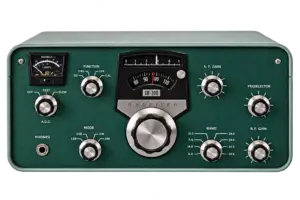
 Benton Harbor Michigan was the, for us and thousands of others, the virtual mecca of ham radio gear!
When the Heathkit catalog arrived, it was a time to pour over the pages of equipment offerings, that soon would find their way to our hamshack.
The Heathkit SB series is one of the most important and recognizable families of amateur-radio equipment from the 1960s and 1970s. It was Heathkit’s attempt to bring high-performance, station-quality HF equipment to ordinary hams at a price they could afford to build themselves. The Heathkit SB line was heavily influenced by the famous Collins S/Line, which is why Heathkit equipment is sometimes affectionately called the “poor man’s Collins.”
We started with the SB-300 and SB-400. Known as the Heathkit twins. A great replacement for the early gear we started out with .
They covered 80 through 10 meters and were designed to work together as a station. Heathkit gave them features normally associated with much more expensive commercial equipment, including crystal filters, a precision tuning mechanism, and transceive capability.
After moving out of the “nest” getting married and starting a family, the Heathkit SB-102 became the corner stone of my shack. The SB-102 incorporated further improvements, including a solid-state LMO arrangement. This transceiver became one of Heathkit’s best-selling amateur-radio kits.
I remember the days returning home to a pile of pieces and parts adorning the dining room table in their various cupcake tins and the famous Heathkit Manual guiding the way to completing the kit and QSOs to be had. I’m happy to say that my very first “on my own” kit worked from the get go. After the tweaking and adjusting, the unit fired up and I Made the first QSO with a fellow from Michigan. And the QSOs with my dad WA7BFP. Still a thrill.
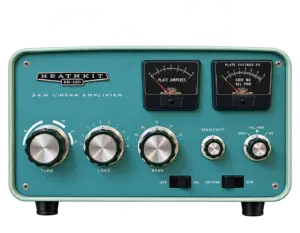 No station is complete without an amplifier. So it was with my station. Enter the legendary SB220. Somewhere in the 70s I added the SB-220 to the shack. It used two 3-500Z tubes and was rated around 2 kW PEP, with approximately 1 kW CW/RTTY output capability. Even today, you’ll encounter SB-220s that have been restored or modified for modern amateur operation. As they say “Real” Radios glow in the dark! hi hi
Alas the SB Line gave way to the more modern solid state units of Icom and others. They just don’t have the look and feel of something you assembled yourself with pride. The Heathkit company is still in business. Nowhere near its preceding identity, but offering interesting kits to assemble. When I first learned they were starting kits again, I quickly purchased one of their first offerings, a digital clock. Beautiful design, with an assembly manual that reflected those from the start.
Want to have some fun, try on a Heathkit. You’ll enjoy the results .

Click the link