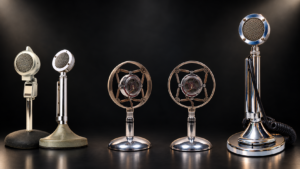
Having a Commercial Radio background I’ve always been interested in the various microphones used not only in commercial applications, but in amateur radio as well.
The history of microphones in amateur radio is a story of changing technology, from the early days of carbon mics and AM transmitters to today’s sophisticated digital audio systems. As radio evolved, so did the way amateurs put their voices on the air.
Early radio amateurs often used simple carbon microphones, similar to those found in telephone systems. Sound vibrations changed the electrical resistance of carbon granules, producing a signal that could modulate an AM transmitter. Audio quality was limited, but these microphones helped make voice communication possible.
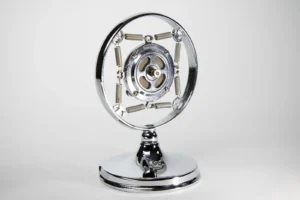
The Golden Age of AM — 1930s and 1940s
Amplitude modulation (AM) became popular among amateurs. Large desk and stand-mounted microphones became familiar sights in radio shacks. Carbon microphones remained in use, while improved dynamic microphones offered clearer audio and more dependable performance.
The Postwar Boom — 1950s and 1960s
The growth of commercial amateur radio equipment brought dedicated microphones from manufacturers such as Shure, Turner, and Astatic. Dynamic and crystal microphones became common, and operators could choose microphones to suit their voices, transmitters, and budgets. The familiar desk microphone became a station centerpiece.
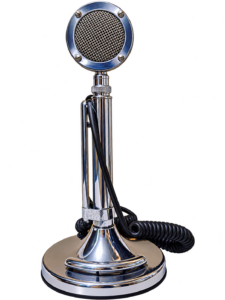 Single-sideband (SSB) voice transmission became increasingly popular because it used spectrum and transmitter power efficiently. Microphones were selected for speech clarity and intelligibility. Popular choices included the Astatic D-104 (Lollipop introduced in 1933) crystal microphone and amplified microphones with adjustable gain and tone controls.
Hand microphones supplied with transceivers became standard, while studio-style dynamic and condenser microphones gained popularity among operators seeking broadcast-quality audio. Electronic equalization, compression, and digital signal processing (DSP) made it easier to tailor transmitted sound.
The Digital Age — 2000s to Today
Computer sound interfaces, USB microphones, and software-based audio processing have expanded the possibilities. Digital voice modes and internet-linked radio systems rely on electronic audio paths as well as traditional microphones. Yet the basic goal remains unchanged: clear, intelligible communication.